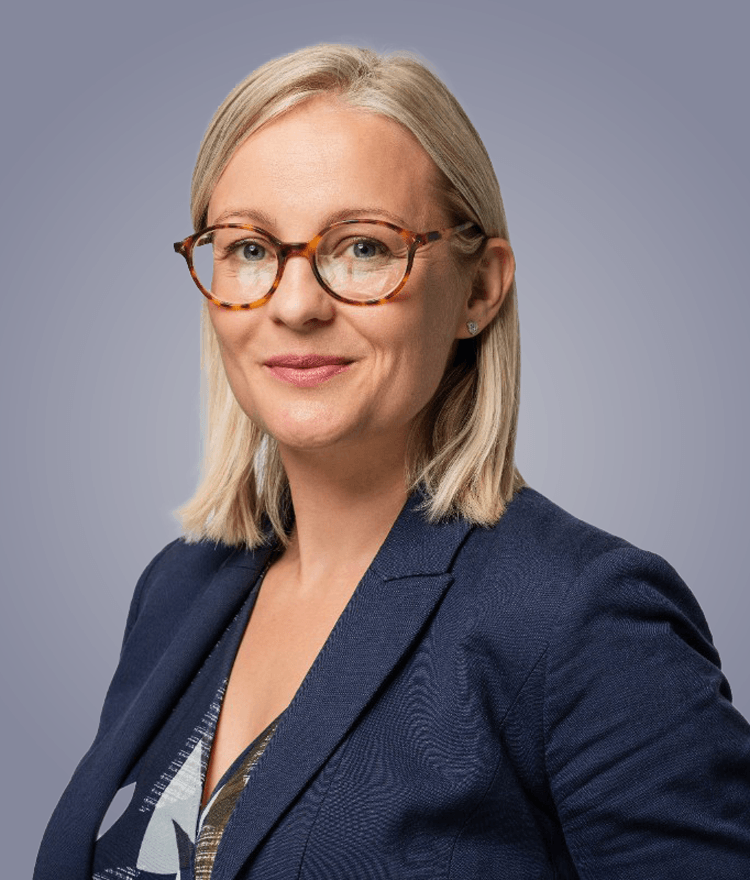
Case Study: Time in the market – Taking a risk doesn’t mean you’re in danger
Choosing to invest can be a daunting decision to make due to the fear of losing money. Hear how Personal Wealth Adviser, Ornella Bille, helped her client to understand that to help reduce risk of investment losses, spending time in the market can be more important than trying to time the market.
One of our key investment principles at Schroders Personal Wealth (SPW) is that time in the market is more important than timing the market. We met with Personal Wealth Adviser, Ornella Bille, where she explains that taking a risk doesn’t always mean that your money is in jeopardy.
Could you tell us a little bit about how you got to where you are today as a Financial Adviser?
Before joining Schroders Personal Wealth, I had never advised before, so it was all new to me and I was eager to study and learn. Now, I’m fully trained and qualified as a financial adviser, and it feels great to say that I love what I do. I really feel that in my role I can help every client that I interact with, in one way or another – that is my mantra.
Each client you form a relationship with and give advice to is different. They have different needs, circumstances, preferences, and willingness to take risk.
In times of uncertainty, how do you highlight to your clients, the importance of staying invested? Is there a key piece of advice you tend to share with all clients?
I tend to share the familiar phrase - it’s not about timing the market, it’s about time in the market that is important. Clients may want to wait until the markets are more stable before they look at investing or they may already have investments and are incredibly worried at what could happen, so they then may think about taking their money out. However, I tell my clients that when the markets are low, it can actually be a great time to buy as you’re likely getting more for your money, although as with all investments this is not guaranteed.
I’ve previously compared it to the housing market. For example, I may position myself as the ‘estate agent’ and create a scenario where the client wants to sell their house. So, if I’m the estate agent and the client told me their house is worth for example, £200,000 and they want to sell their property at this point, and I turn to them and say, sorry Mrs customer, you think it’s worth £200,000, it's actually worth £120,000 now due to a dip in the market – would you still be happy to sell? The answer is almost always no. As a result, my client can understand the importance of staying invested for the long-term. This concept is the same as investments – you may lose out if you sell at this point when the markets have dropped.
Each client is unique, so tailoring each introductory call and meeting to each client’s needs is very important. Taking into consideration characteristics such as the clients age and their capacity for loss gives me, as an adviser, an idea of how much money we need to set aside for them to access in the short-term and what we can potentially do with the remainder to give them a stronger plan for the future.
Is there a particular scenario that you’ve experienced with a client where you’ve helped them to fully understand the importance of investing for the long-term, so advising them as to how beneficial investing for 5 years can be?
I had an introductory phone call with a client who from the outset made it clear that they didn’t want to invest because they didn’t want to take any risk with their cash. He wanted to keep all his money where it was in his bank account as this way it wasn’t going to go up nor down.
My client had £150,000 that he had inherited from his mother who had passed away. I explained what our first meeting would consist of – providing him with a good snapshot of his financial position of where he is now, to where he’d like to be. Through informing him that in order for his money to work harder, which was one of his asks, he may need to take it out the bank.
Historically, investments have done better than what you can get in a bank or a building society, although this isn’t always guaranteed.
Through reassurance and taking the time to talk to him, he began to view taking ‘risk’ in a different light. The associated element of danger was lost as he understood that risk doesn’t necessarily mean you’re going to lose any money. Risk could mean how much of that money are you prepared to let fluctuate whilst it’s invested.
By the end of our call, my client was confident that he would have the opportunity to put money aside for all the lovely things he wants to do - buy a new car, home improvements, or treat his wife to a holiday. He could also leave money as an emergency slush fund, and then whatever is left, he could invest some of that with the aim of providing a nest egg to help his financial future.
It’s important when speaking with clients that I truly believe what I am sharing with them. Having invested for years for my kids, I know how it’s helped them, and I want my clients to reap the same benefits, knowledge, and feelings.
Cash savings and investments are protected to the value of £85,000 per person per institution by the Financial Services Compensation Scheme (FSCS).
However, the value of investments may fall as well as rise and are not guaranteed. The investor might not get back their initial investment.