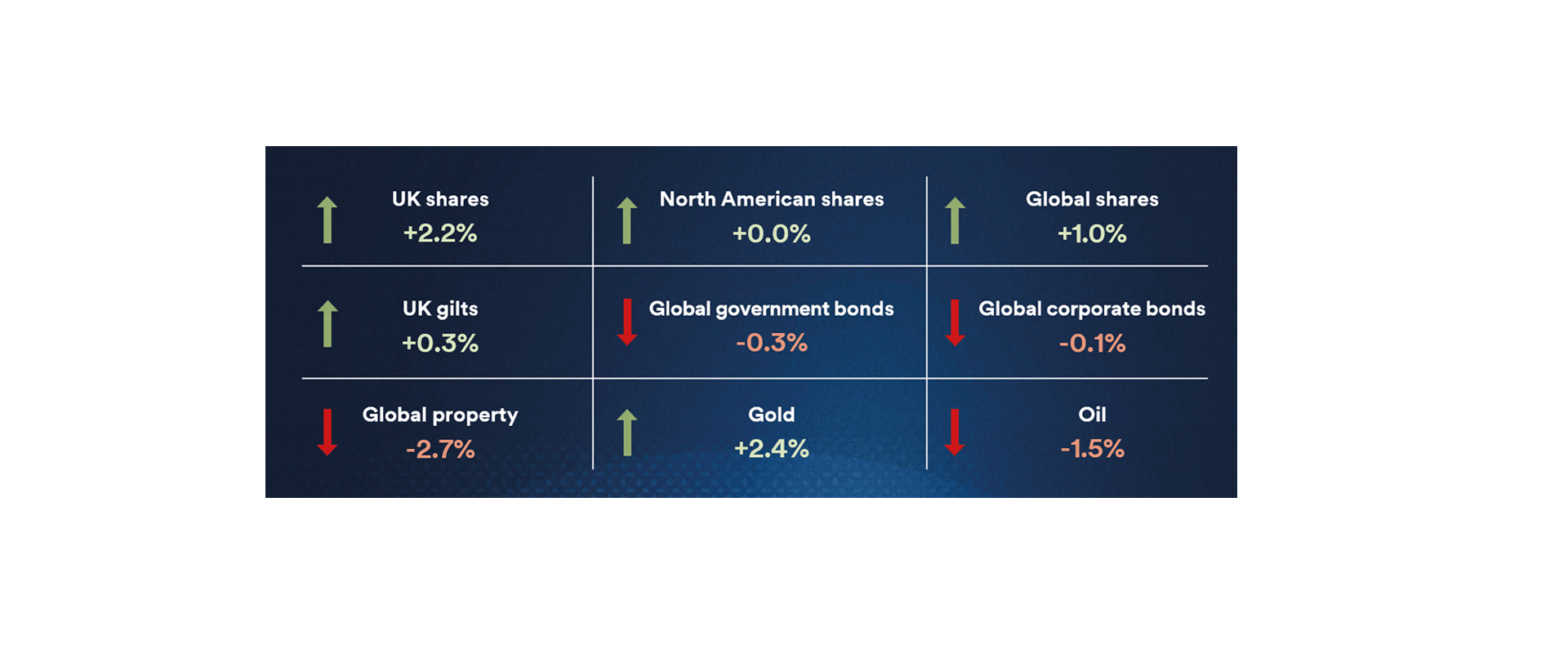
How shifting oil prices affect your finances
Oil and gas prices are moving sharply as tensions in the Middle East shift day by day and these rapid swings have important implications for your investments, inflation expectations and interest rates.
Recent events in the Middle East have caused significant movement in global energy markets. Tensions in the region, disruptions around the Strait of Hormuz and statements from political leaders have all contributed to rapid changes in oil and gas prices. At times prices have surged due to concerns about supply constraints, while at other moments they have fallen sharply when expectations around the conflict shifted.
Because the situation on the ground is evolving quickly, oil and gas prices may continue to move in either direction in the coming days. The aim of this article is to help you understand what these swings mean for your investments, inflation expectations and interest rates, and why a long term mindset remains essential.
Why oil prices are changing so quickly
The key factor behind recent volatility is uncertainty around supply routes. The Strait of Hormuz, a vital shipping lane that carries around 20 percent of the world’s oil, has been heavily affected by the conflict. Shipping delays, attacks on infrastructure and heightened risks to vessels have all contributed to market anxiety.
Markets also respond rapidly to political commentary. Statements from President Trump suggesting that the conflict could be “over soon” have, at times, led to declines in oil prices after earlier surges linked to escalating tensions.
The combination of real supply disruption and changing expectations creates a market environment where prices can move sharply in either direction with very little notice.
What this means for your investments
Oil price swings can influence global markets in several ways:
1. Sector performance will vary
Energy companies can benefit when oil prices rise, while sectors that rely heavily on fuel or transportation may experience higher costs. In contrast, when oil prices fall, consumer facing sectors may find conditions more favourable.
2. Markets may remain volatile
Periods of heightened geopolitical tension often lead to short bursts of volatility. This reflects changing expectations around growth, inflation and corporate earnings. Rapid movements in oil prices can amplify this effect, especially when the underlying driver is uncertainty rather than clear economic data.
Remember that the value of investments and the income from them can fall as well as rise and are not guaranteed, and so you might not get back your initial investment.
3. Diversification helps
A diversified portfolio can benefit from exposure to sectors that react differently to energy price movements. This balance can help smooth returns during periods of market turbulence.
This table demonstrates the key benefit of diversification. It shows how different asset classes have performed over a number of years in percentage terms. You’ll see that no single asset class consistently comes out on top. This highlights how difficult it is to forecast which asset class will perform best in the future.
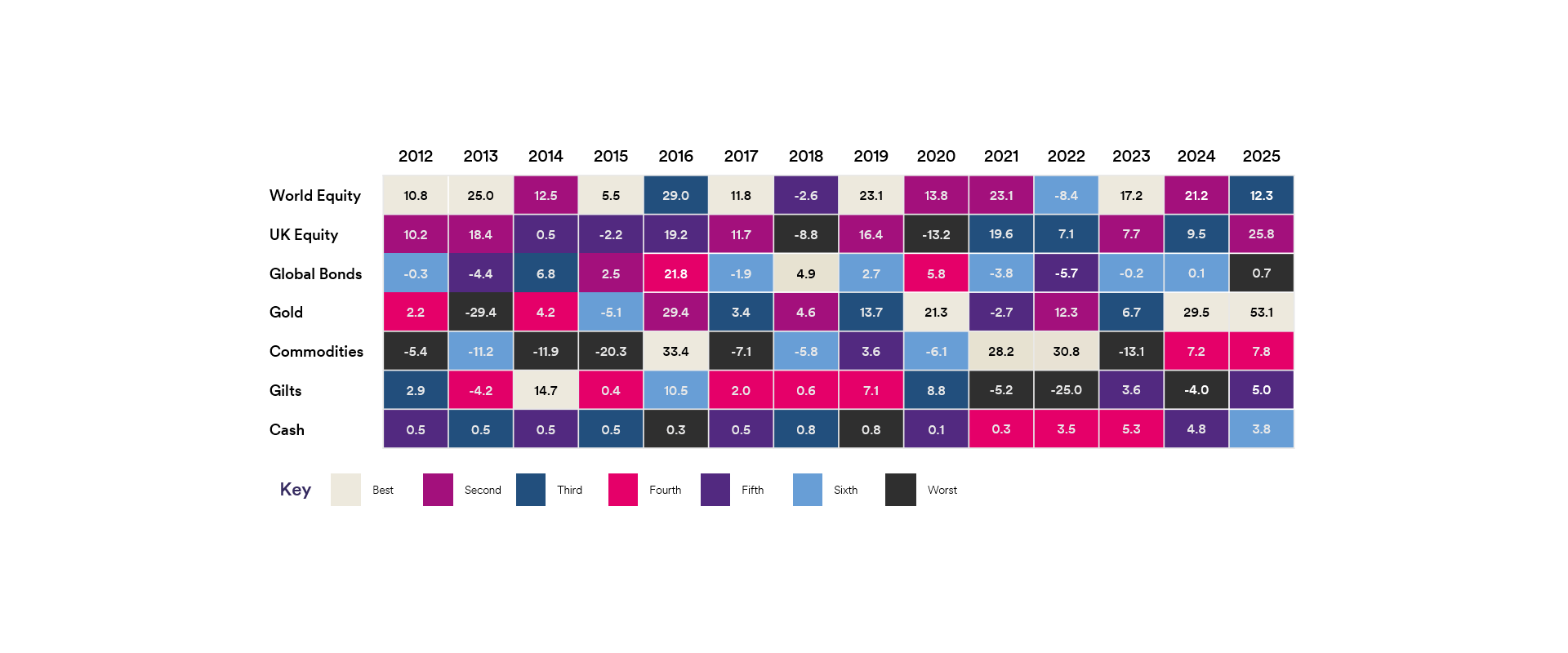
This is why we believe that by holding a range of investments, you are not exposed to one single type of asset therefore your investment risk may be reduced. The mix of assets that are appropriate to you will depend on your individual circumstances and your financial goals. A good financial adviser can offer insights into which blend of investments could potentially be right for you based on your financial planning needs.
What this means for inflation
Energy costs are a significant driver of inflation. Rising oil prices can push transport, manufacturing and household bills higher. Conversely, falling oil prices can ease these pressures.
Analysts from the National Institute of Economic and Social Research suggest that a temporary rise in energy prices could lift UK inflation by around 0.3 percentage points, while a longer lasting shock could increase inflation by around 0.7 percentage points.
However, today’s movements show how quickly the inflation outlook can change. If oil prices fall further, that may help reduce inflationary pressure. If they rise again due to renewed disruption, central banks will remain cautious.
What this means for interest rates
Central banks monitor changes in energy prices because they influence the inflation outlook. Rising oil prices can make policymakers more hesitant to cut interest rates, while falling prices may support a case for easing over time.
Policymakers are assessing how to manage the risk of rising inflation while still supporting economic growth. Some central banks may choose to keep interest rates steady for longer if higher energy costs continue to put upward pressure on prices.
In the UK, if the impact on energy prices proves temporary, interest rate changes may be modest. If disruptions persist, the Bank of England could feel pressure to keep rates higher for longer than previously expected.
Why staying invested is often the most sensible approach
When markets move quickly, it can feel tempting to react. But short term swings often reverse just as fast as they appear.
The recent pattern in oil prices illustrates this. Prices surged to nearly 120 dollars per barrel at one point before falling sharply to below 90, driven largely by changes in expectations rather than confirmed outcomes.
For long term investors, reacting to every change can be counterproductive. Market rebounds frequently occur during periods of heightened uncertainty, and missing just a few of the strongest days in the market can significantly affect long term returns.
Investors who stay invested capture the full sequence, including the recoveries that often follow declines. Missing even a handful of the strongest market days could significantly reduce long term returns. Research that looks at global equity markets over the past several decades consistently shows that missing the best 90, 60, 30 or even just 10 days, could lead to much lower final outcomes, even when the investor remains invested for the rest of the period.
These best days frequently cluster around the worst ones, making it extremely difficult to exit and re‑enter the market at the right points.
A more reliable approach is to stay invested, remain diversified and ensure your portfolio aligns with your long term goals and risk appetite.
Keeping your financial plan on track
Your financial plan is designed for the long term which allows it to weather short term storms and uncertainty. While events in the Middle East are driving short term market movements, your long term objectives are unlikely to change day by day.
If you’d like to discuss any concerns about how recent events may affect your finances, our team of experienced advisers are ready to help. There’s no financial commitment required upfront; you’ll only pay if you decide to proceed with the recommendations outlined in your personalised financial plan.
Important information
This article is for information purposes only. It is not intended as investment advice.
Past performance is not a reliable indicator of future performance and forecasts of future performance are not a reliable guide to actual results neither is past performance a guide to future returns.
In preparing this article we have used third party sources which we believe to be true and accurate as at the date of writing but can give no assurances or warranty regarding the accuracy, currency or applicability of any of the contents in relation to specific situations and particular circumstances.
Any views expressed are our in-house views at the time of publishing. This content may not be used, copied, quoted, circulated or otherwise disclosed (in whole or in part) without our prior written consent.