MarketWatch for March 2026
March proved to be a testing month for investors as geopolitical tensions pushed energy prices higher and reignited concerns about inflation. With markets turning more cautious across regions, we explore what drove market movements, which areas held up best, and what this could mean for portfolios looking ahead.
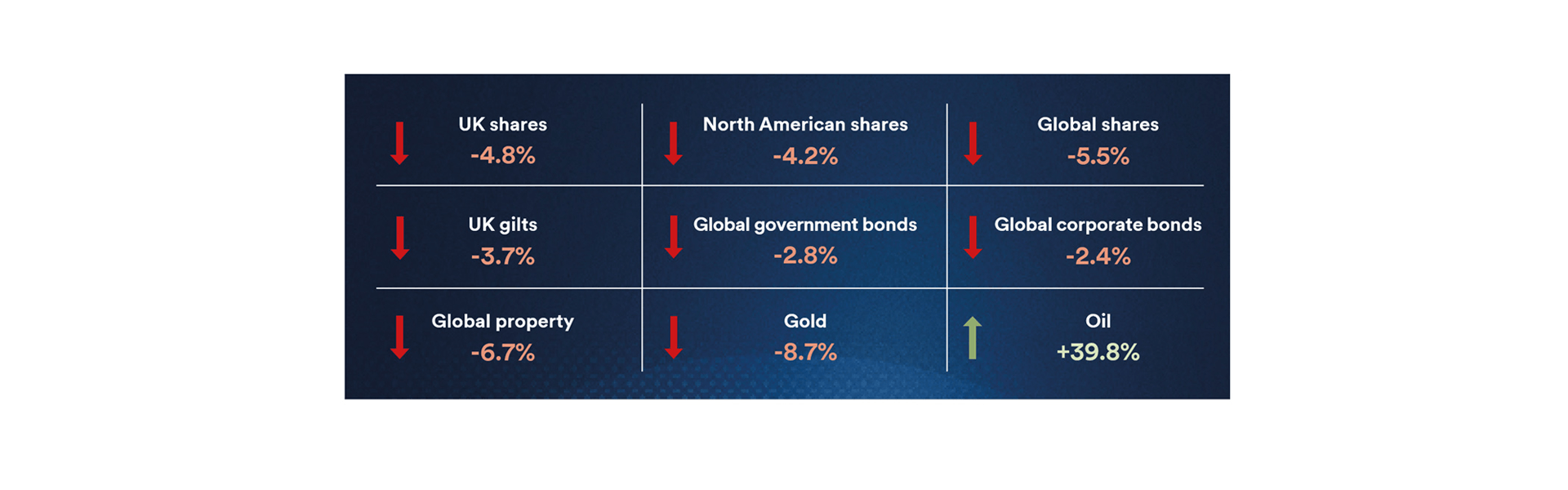
March was a challenging month for investors as global markets came under pressure. Rising geopolitical tensions in the Middle East led to higher energy prices, which in turn raised concerns about inflation and the impact this could have on economic growth. As a result, investors became more cautious, particularly towards assets seen as more sensitive to changes in interest rates.
United States
US share markets fell during the month, with only energy-related companies delivering positive returns as oil prices rose sharply. Higher fuel costs increased concerns that inflation could remain stubborn, potentially delaying future interest rate cuts.
More economically sensitive sectors such as industrials and healthcare were among the weakest performers, reflecting worries about slower growth. The US central bank kept interest rates unchanged, repeating that further progress on inflation would be needed before borrowing costs can be reduced.
Europe
European shares declined in March, largely driven by rising energy prices and increased uncertainty around inflation. Energy companies were again a bright spot, benefiting from higher oil prices, while most other sectors struggled.
Inflation in the euro area rose to 2.5% in March, coming in below market expectations, while core inflation edged lower to 2.3%. While this was a modest improvement on underlying price pressures, it served as a reminder that inflation risks remain and that progress back towards target may not be entirely smooth. This added to investor caution, particularly given Europe’s reliance on imported energy.
United Kingdom
UK shares also finished the month lower. As in other regions, energy stocks performed well against a difficult backdrop, reflecting the jump in oil prices.
The Bank of England left interest rates unchanged, and policymakers struck a more cautious tone than markets had expected, noting that higher energy costs could reignite inflationary pressures. This reduced hopes for interest rate cuts in the near term and weighed on investor confidence.
Japan
Japanese shares fell sharply in March. Market movements were influenced largely by global events rather than domestic factors, particularly higher energy prices and increased geopolitical risk.
Some investors also moved away from strategies that had previously benefited from a weak yen, which added pressure to Japanese markets during the month.
Emerging Markets
Emerging market shares fell more heavily than developed markets. Countries that rely on imported energy were particularly affected by rising oil prices, with Korea among the weaker performers.
India also struggled as higher energy costs, supply-chain disruptions and a more cautious global investment environment weighed on sentiment. Overall, investors reduced exposure to higher-risk markets as uncertainty increased.
Fixed Income
Bond markets were volatile in March. Government bond yields rose across major regions as investors reassessed the outlook for interest rates in light of rising energy prices and inflation risks.
European and UK government bonds were among the weaker performers, reflecting concerns about energy exposure and more cautious central bank messaging. Toward the end of the month, bond yields eased slightly as focus shifted back towards economic growth risks, but this was not enough to offset losses for the month.
Corporate bond markets were more resilient, particularly in the US, where exposure to the energy sector provided some support.
Commodities
Commodity prices rose strongly overall in March. Energy prices increased sharply due to geopolitical tensions and worries about supply disruptions.
In contrast, precious metals fell as higher interest rate expectations reduced their appeal, while investors focused on the prospect of borrowing costs staying higher for longer.
Important information
Fees and charges apply.
The value of investments and the income from them can fall as well as rise and are not guaranteed. Investors may not get back the amount originally invested.
In preparing this article, we have used third party sources we believe to be reliable as at the date of writing, though we cannot guarantee the accuracy or completeness of the information.
Any views expressed are our inhouse views at the time of publication. This content may not be copied, quoted or circulated (in whole or in part) without prior written consent.